Home
Home 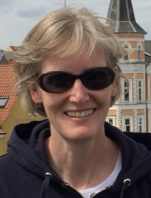 Clare Hawkins, PhD
University of Copenhagen
Interview by: Nathalia Rocco Machado, PhD
How did your scientific journey start, and how did you enter the field of redox biology?
My scientific journey started when I was an undergraduate student at the University of York, in the UK. My final year research project involved using elecrtron paramagnetic resonance (EPR) spectroscopy to characterize radicals formed on proteins after exposure to different environmental pollutants. I found that I was very good at spin trapping and assigning the peaks in EPR spectra to specific radical species. This project really sparked my passion for free radical reseach, and led me to my PhD studies, which had a more medical focus. My PhD project focused on the involvement of radicals in the degredations of cartilage and synovial fluid in rhuematoid arthritis. I continued developing my skills in EPR technicques and was also able to gain expertise with other related techniques.
What has been your most exciting discovery in research so far?
This is hard to answer, but when I was a PhD student, I discovered that hypochlorous acid (HOCI) was able to generate nitrogen-centered radicals on the glycosaminoglycan, chrondroitin sulfate,. My inital experiments were quite crude, I simply added some regular household bleach to the chrondroitin sulfate in the presence of a spin trap. I didn't discuss these experiments with my supervisor initially, but when I saw some beautiful EPR signals with coupling constants characteristic of a radical centered on the amino nitrogen group, I thought it was OK to come clean. This discovery was exciting because it was the first demonstration that hypochlorous acid, which is usually thought og as a 2-electron oxidant, could generate radicals. It was important in the context of rhuematoid arthritis, as there is an infiltration of neutrophils into the join, which are activated and release myeloperoxidase, which forms HOCI.
During my PhD, I extended these studies to other glycosaminoglycans, and also began studies with proteins. I was lucky enough to be able to continue these studies but in a different disease context, in my postdoc position, where I had the chance to study the mechanisms of these reactions in more detail, and also study reactions with nucleic acids, different phospholipid head groups and more complex cellular systems. More recently, my group showed that macrophages could release extracellular traps under inflammatory conditions, and that the mechanisms involved in this process are not necessarily the same as for neutrophils. With help from a collaborator, we were able to get some great images of the cells releasing the traps using scanning electron microscopy.
Who has been your greatest teacher/mentor? What are the most important factors that shaped your career?
My greatest teacher and mentor is Professor Michael Davies. Mike was my PhD supervisor in York, and he offered me the opportunity to move to Sydney, Australia and join his new group and the Heart Research Institute (HRI) when I finished my PhD studies. We have had a very productive and long-standing collaboration, which has continued at the University of Copenhagen in Denmark. Mike is one of the few people I know who shares my passion for EPR spectroscopy and spin trapping, and will be as enthusiastic as myself when faced with the task of assigning individual spectral features to specific radicals in a complex spectrum. Although we don't use EPR as much these says in redox biology, the scientific principles, and the research skills I learnt doing these experiments have been important in shaping my career, as has success with attracting research funding from different organizations. I'd also like to acknowledge Professor Christine Winterbourn as playing a part in shaping my career. She has been one of my key role models. Her work on myeloperoxidase inspired me to try those EPR experiments with HOCI as a PhD student, and we have had many fruitful scientific discussions since then.
What are your hobbies outside the laboratory?
I really like being outdoors and hiking or bushwalking, though at times, it is perhaps not quite so enjoyable weather-wise since moving from Sydney to Denmark. I have been involved with the Girl Guide and Scout organisations for most of my life and have really enjoyed being a youth leader and making opportunities for kids to go camping, try new activities and develop their eladership skills. I also do a lot of baking and I am a huge fan of the "Great British Bake-Off" (and Australian and Danish equivalent) shows.
P.O. Box 1488
Warrenville, IL
info@sfrbm.org



® Copyright 2026 Society for Redox Biology and Medicine