Home
Home By Maria Fernanda Forni, Ph.D., University of São Paulo
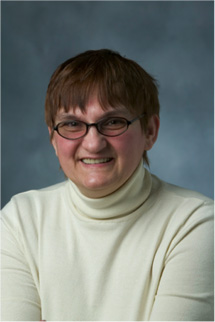
I was born and raised in Zagreb, Croatia. I finished my undergraduate and graduate education there, obtaining a Ph.D. in bioinorganic chemistry at the University of Zagreb. Due to the civil war in my country, my family and I left Zagreb for the Duke University Chemistry Department. There I became involved in iron siderophore chemistry and its biological aspects. Due to the shortage in funding, in early 1995 I took the opportunity to join Irwin Fridovich’s lab in the Biochemistry Department at the Duke School of Medicine. I thus changed my research interests from siderophores to porphyrin-based mimics of superoxide dismutase. For over 23 years I have explored all aspects of Mn porphyrins starting from their synthesis and characterization all the way to their role in biology and medicine. For me, working with very redox-active Mn porphyrins opened the doors to redox biology. It was initially a survival story. Yet over time, Mn porphyrins became a part of my family and perhaps, as my friend and colleague Daret St. Clair put it - my “baby”. I am very happy and excited to see them now matured into four clinical trials. I have been also involved in fruitful and enjoyable collaborations with many colleagues and dear friends, biologists and medical doctors, with the goal to gain further insight into the intricate in vivo mechanisms of action of Mn porphyrins. It all gave rise to wonderful friendships and numerous opportunities to meet exceptional and unique young students and researchers in my lab and outside of it from all over the world.
My research interests are in drug development for the treatment of diseases that have oxidative stress in common, such as injuries of the central nervous system, ischemia/reperfusion, diabetes, radiation injury and cancer. In addition to making and characterizing drugs, my interests have been also in their bioavailability and mechanism of action; this turned out to be as important for the drug development as the drug design in its own right. Such studies have provided us with an important feedback for the synthesis of molecules of improved properties.
My lab has synthesized numerous Mn and Fe porphyrins as well as some other metal complexes, such as Mn biliverdin and their analogs, initially, all of them developed as SOD mimics.
My first breakthrough happened in 1997 when I identified the key functional group on porphyrin structure – ortho pyridyl substituent. It which makes metalloporphyrins redox-active and biocompatible with small and larger reactive species. In turn, such compounds have proved to be not only powerful SOD mimics, but also modulators of cellular redox-based signaling pathways.
Another breakthrough was the establishment of the structure-activity relationships (SARs) between kinetic and thermodynamic properties of metalloporphyrins. Thermodynamics tells us whether these compounds can undergo a particular reaction while kinetics tells us how fast this reaction will happen. SARs are valid for a variety of redox-active drugs, thus having a general applicability. Based on SARs, we have identified three lead Mn porphyrins; these have been the most frequently studied compounds in cellular and animal models.
Finally, our most valuable and gratifying achievement has been the progress of two Mn porphyrins, MnTE-2-PyP5+ (BMX-010, AEOL10113) and MnTnBuOE-2-PyP5+ (BMX-001), into clinical trials. My work and my collaborative efforts jointly gave rise to 208 manuscripts and book chapters.
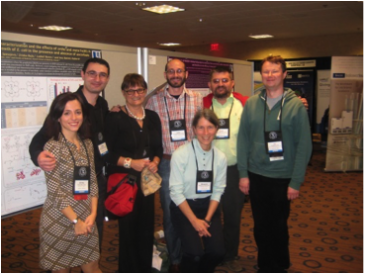 |
| Key players in the development of Mn porphyrins and understanding their mechanism of action. From L to R: Zrinka Rajic, Artak Tovmasyan, Ines Batinic-Haberle, Julio S. Reboucas, Margaret Tome, Ivan Spasojevic, and Tin Weitner. |
I personally switched the field of research twice upon arrival to the USA and that has been extremely challenging and stressful. As the war was still raging in my country, I was left with no other option than to stay in the USA and put enormous efforts into synthesizing “something” that could be a prospective therapeutic - almost an impossible goal in early 1995. A further difficulty has been that, as a foreigner, you are an outsider with no family or friends for support in your new country. It was very, very tough. One statistic says that 30% of all the patents are invented by the people who needed to survive. I would definitely fit into this statistic.
The important thing that benefited me and my family is making friends and becoming part of the local culture rather than sticking exclusively with people who came from my country; the latter strategy might have eventually made a foreigner feel excluded, isolated and lonely. In that regards, my son did a particularly good job. Coming to the USA at the age of 10, he was scared that he would never make it to college; we were very worried. Yet, as he did in Zagreb, he continued passionately and enthusiastically to make friends just about everywhere such as in the symphony orchestra (with cello) and marching band (with saxophone) and in swimming, basketball, tennis and soccer teams. Watching him made us very happy and feeling at home in North Carolina.
I came to the USA at the age of 40. My best mentors were and still are in Croatia: Dr. Dubravka Barisin-Kahlina, Professor of General and Inorganic Chemistry, and Dr. Mladen Birus, Professor of Physical Chemistry. I served as a teaching assistant and research associate in the Lab of Dr. Barisin-Kahlina. Eventually, I became Assistant Professor, just a few years before coming to the USA, where the whole process started all over again. During my graduate years, under the mentorship of Dr. Mladen Birus, I fell in love with science. Both mentors mentored me through my career and my personal life. Over more than 40 years of my career, I have gained the personal experience that one needs mentors who will be always there for you and more or less on a daily basis. Who will be willing and happy to dedicate a part of his/her time when you have difficult times in doing experiments but also when you need life advice. Having myself all kind of experiences, I put significant efforts to do so as a mentor.
For a long time, I found an academic career superior for different reasons: flexibility in working on your ideas, business independence, flexible hours, freedom of mind, multicultural environment, etc. Yet the world has changed and so have the Universities walking now hand in hand with industries. In the time of the lack of governmental support, industries are offering significant support to Universities. The main drawback being, they ask for immediate solutions of exact questions, allowing for little space wondering around and little time to relax and think – essential requirements for discoveries.
On the topic of the government support and its invaluable impact, I have just learned the following fact: NIH has supported the development of 210 new FDA approved drugs and their 150 biological targets in the period of 2010-2016!
In such a climate, one needs to try in parallel to consider both academic and industry careers. While in past the best minds most often entered academia, now excellent young scientists are frequently entering start-ups and other established companies, which offer wonderful opportunities for research also. One needs to educate him/herself during undergraduate and graduate years for both career options. Essentially both academia and industry are nowadays allowing for research and research product commercialization. Over the years, I learned the value of proper steps needed to commercialize your inventions as they enable the flow of money to support your research. Obtaining an MBA degree along with a Ph.D. degree is something I would do if I were a graduate student today. Such combination of degrees would largely increase your career options.
Wherever you end up, you will eventually have the opportunity to develop, and if persistent and hardworking enough, you will end up with the career you have dreamt about. At present, it seems to me that more chances for young Ph.D.s and postdocs are available in industry where an MBA degree would help a lot. Still, the key is always hard work and persistence.
I have never faced gender bias myself, but it does exist. It is still a male-governed world and for a woman to succeed additional efforts and/or skills may be needed. However, it is getting better. One needs persistence, patience, kindness and eventually, you will make it. You still may not be equally awarded for your work as men are - as of yet. We are still only decades away from the strictly patriarchal societies of the Western world.
Cellular redox-environment has just recently emerged as a drug target. Cellular redox-based pathways are extremely complex and only a tiny fraction of those are understood. There is a lot to learn to fully grasp the concepts of redox biology. It is still going to take a while for the medical audience to understand and appreciate redox biology as a drug target.
I am very hopeful. The insight into the key role of redox in cellular metabolism is gaining attention. We have two metal-based redox-active compounds developed from different groups (that target cellular redox environment) that are now in the clinical trials and the first data are promising. They are of different structures targeting the same disease: injury of normal tissue induced during radiation of cancer patients. Data obtained and their comparison will help advance the field of redox-active therapeutics, and develop better drugs targeting the redox state of the cell. In addition to synthetic compounds, plant-derived redox-active drugs are rapidly gaining interest. Perhaps the future lies in combining redox-active therapeutics with other types of drugs targeting particular proteins.
Chemists, biologists and the medical audience all view differently the compounds that have been historically called antioxidants. Presently, the medical audience and many biologists assume that whatever drug inflicts favorable effect upon redox-based signaling pathways is an antioxidant – this is the traditional and most common point of view. However, what happens on the very molecular level may not necessarily be antioxidative in nature. Most recently, we and others have provided evidence that at least some of the therapeutic effects are consequences of the oxidation reactions of the so-called “antioxidants”.
There is a question here: shall we classify the drugs based on their therapeutic effects or based on the reactions they undergo to inflict those effects? Clarifying this should be one of the future goals of those working in drug development and those using redox-active drugs/antioxidants to treat those diseases that have oxidative stress in common. I personally think that a correct name for antioxidants is - redox-based drugs. Eventually, this nomenclature "antioxidant vs redox-active drug", should be clarified to a wider audience that includes the lay audience as well.
There has been an immense progress and it happens on a daily basis; most so on a technological level. We are still far from understanding cancer but the insight into its complexity increased enough to allow patients to live longer and healthier lives upon diagnosis.
That is tough. It gets easier if you and your partner work in similar fields so that you understand each others work overload and the necessity for working long hours. That allows for additional happiness arising from the joy of sharing discoveries while comfort and support when all goes dreadfully wrong. Over my lifetime, I see more and more couples working together. While in my first marriage my husband, an architect, did not have much understanding for the long hours needed for successful experiments, life with my present husband, and my colleague (Ivan Spasojevic), is just a whole other story.
I had few dreams when I was young; none of them were to become a scientist. Looking in retrospect, the reason was most likely the fear of it, thinking this is simply not something I can manage. Growing up I started to understand that science is everything around us, our body, our planet, our food, everything and is actually very simple if explained in a proper way. I ended up loving science. It is to our advantage as scientists, when compared to those engaged in humanities, to understand the world around us at a very basic level. It is unfortunate that we do not have teachers good enough to overcome such fears of science in many kids (through elementary and high school education) and get them involved in science for their sake and for the sake of the world.
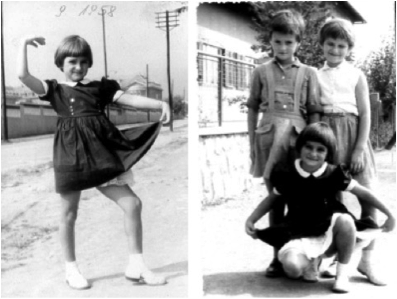 Yet regardless of my present love for science, I still have regrets, as my main dream was to become a ballerina. I danced ballet for 5 years, folk dances for 2 years and 1 year of ballroom dancing. Yet my parents were too busy to catch my passion at the early age of 6 and put me through the official ballet school. My passion was very obvious as I was often dancing in the streets. At the age of 10, I started playing ballet in a children’s theater. The ballet class was run by a ballerina from the Croatian National Theater. At the age of 15, I realized the need to enter the official school of ballet. Unfortunately, I was denied the entrance on the grounds of the lack of knowledge on subjects other than ballet dancing such as of piano, solfeggio, character dancing, etc; my age worked against me also. That caused an impossible pain that has persisted for years. I am still passionate about ballet, opera, dancing and music in general.
My second dream was to be the part of expeditions to the most extreme world locations such as the Arctic and Antarctica. This topic ended up being my high school graduation work. Had I been born in the USA it would have been easy to pursue such dreams. I put thorough efforts into pursuing it: when I finished my undergraduate studies, I contacted the Office for Undeveloped Countries in Zagreb and offer my help working on different locations worldwide. The answer I got: the office was only a formal one. Related to this, I also wanted to become a travel guide. I ended up guiding myself and my husband to as hidden locations worldwide as possible.
P.O. Box 1488
Warrenville, IL
info@sfrbm.org



® Copyright 2026 Society for Redox Biology and Medicine